American Roulette: Risks and Rewards
Exploring the complexities of American roulette and its impact on player strategy.
- Higher house edge
- Unique number order
- Double zero impact
- Popular in USA
Roulette layouts are the arrangement of numbers and betting options on the table, reflecting the wheel's structure.
Welcome, readers, to an in-depth exploration of roulette layouts—the foundation of one of the most iconic casino games in the world. Whether you're a seasoned player or new to the spinning wheel, understanding the nuances of roulette layouts is essential for making informed betting decisions and maximizing your chances of success. Roulette layouts are not just about aesthetics; they directly influence the odds, betting options, and overall gameplay experience. By familiarizing yourself with the different types of layouts—European, American, and French—you can better navigate the game, choose the variant that suits your strategy, and appreciate the subtle differences that shape your outcomes.
A roulette layout refers to the arrangement of numbers, betting options, and design elements on the felt surface of the roulette table. This layout mirrors the structure of the roulette wheel and dictates how players place their bets. The layout is crucial because it determines the available wagers, the house edge, and the flow of the game. For players, understanding the layout means knowing where to place bets, what odds are associated with each bet, and how the rules of the game may vary depending on the type of roulette being played.
There are three primary types of roulette layouts: European, American, and French. Each layout has distinct features that set it apart:
The roulette layout is designed to reflect the arrangement of numbers on the wheel. In all variants, the numbers 1 through 36 are split evenly between red and black, with the zero(s) marked in green. The layout typically consists of a grid of numbers, with outside bets (such as red/black, odd/even, high/low) placed around the edges. The specific arrangement of numbers and betting options varies between layouts, influencing the flow of the game and the types of bets available.
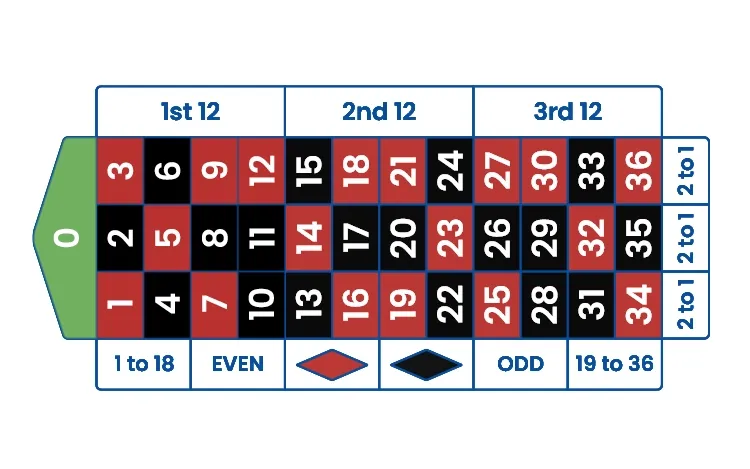
The European roulette wheel has 37 pockets, numbered 1 to 36 and a single zero (0). The numbers are arranged in a specific order that alternates between red and black, with the zero positioned at the top of the wheel. The table layout is a grid of numbers, with the zero at the top and the numbers 1 to 36 arranged in three columns of 12. This design allows for a balanced distribution of numbers and colors, providing a fair and enjoyable gaming experience.
European roulette offers a wide range of betting options, including:
The layout is designed to make it easy for players to place their bets, with clear markings for each type of wager. The house edge for European roulette is approximately 2.7%, making it a favorable option for players seeking better odds.
Different roulette layouts cater to various strategies and player preferences.
Layout choice affects gameplay experience, odds, and potential winnings.

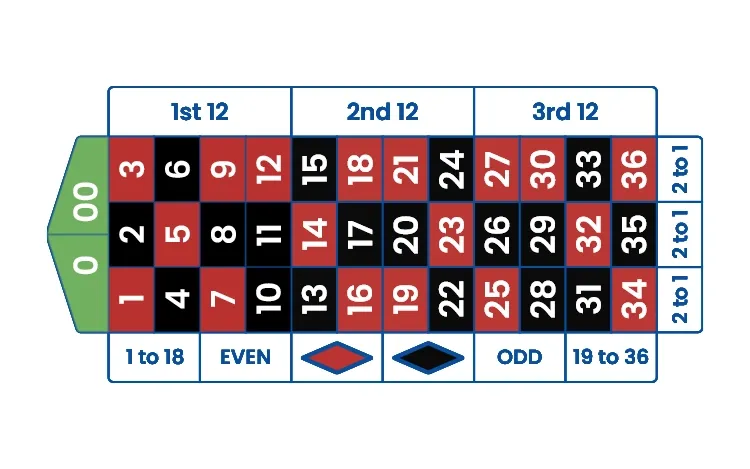
The American roulette wheel has 38 pockets, including a single zero (0), a double zero (00), and numbers 1 to 36. The addition of the double zero increases the house edge and changes the odds for players. The numbers are arranged in a different order compared to the European wheel, with the double zero positioned opposite the single zero. The table layout is similar to the European version but includes an extra pocket for the double zero.
American roulette offers the same types of bets as European roulette, with the addition of the top line bet, which covers the numbers 0, 00, 1, 2, and 3. This bet has a higher house edge than other bets, making it less favorable for players. The overall house edge for American roulette is approximately 5.26%, which is significantly higher than European roulette. This means that, on average, players can expect to lose more money over time when playing American roulette.
French roulette is similar to European roulette in terms of wheel and table design, with a single zero and 37 pockets. However, it includes special rules that can benefit players:
These rules reduce the house edge for even-money bets to approximately 1.35%, making French roulette the most player-friendly variant.
French roulette offers the best odds for players, thanks to the La Partage and En Prison rules. While the layout is similar to European roulette, the placement of outside bets is slightly different, with bets split between the two long sides of the table. This design allows for a more elegant and traditional gaming experience. Compared to American roulette, French roulette has a much lower house edge, making it a preferred choice for players seeking better odds.
Understanding the different roulette layouts is essential for making informed betting decisions and maximizing your chances of success. European roulette offers a lower house edge and a balanced gaming experience, while American roulette has a higher house edge due to the double zero. French roulette stands out with its special rules, providing the best odds for players. By familiarizing yourself with the layout of each variant, you can choose the game that best suits your strategy and enjoy a more rewarding roulette experience. Remember, knowledge is power—understanding the layout is the first step toward mastering the game.
Top game providers support this guide by offering quality roulette games with various layouts.


Exploring the complexities of American roulette and its impact on player strategy.
Why European roulette remains a top choice for players worldwide.
Discover how players are using special rules in French roulette to boost their odds.
The latest tech innovations designed to enhance fairness and randomness in roulette wheels.
Competitive roulette tournaments are gaining popularity, attracting players globally.