
Understanding Your Wisdom Teeth
Explore the history and modern role of wisdom teeth in dental health.
- Historical Role
- Modern Issues
- When to Extract
- Alternatives to Extraction
Dive into the intricacies of wisdom teeth existence, historical context, and modern relevance.
Can you leave wisdom teeth in? This question often arises from a common misconception that wisdom teeth must always be removed. Understanding that the necessity for removal isn't a universal rule is important. The context surrounding wisdom teeth is essential, as not every individual requires extraction. In fact, healthy wisdom teeth can remain in place without issue. This article explores the nuances of wisdom teeth retention and the factors influencing the decision to keep them or remove them.
Wisdom teeth, also known as third molars, are the last set of molars to develop and typically emerge between the ages of 17 and 25. However, their emergence timeline can vary significantly. Many individuals begin to notice the onset of these teeth around the age of 13, while others may experience them as late as their mid-twenties. Understanding when to expect them can aid in anticipating potential dental issues.
Historically, wisdom teeth served a practical purpose for our ancestors. Larger jaws allowed for an extra set of molars that aided in chewing tough, coarse foods like roots and nuts. As human diets transitioned towards softer foods and jaw sizes reduced through evolution, the necessity for wisdom teeth lessened, with many people experiencing complications due to overcrowded mouths.
While wisdom teeth can be beneficial, they often lead to several common issues:
Due to these potential complications, regular dental assessments are crucial for managing wisdom teeth health.
Discover the criteria for keeping wisdom teeth and when extraction is necessary.
Learn about the potential complications and alternatives to surgery.

To determine if it is appropriate to leave wisdom teeth in, several criteria must be met:
Maintaining regular check-ups is vital to ensure that any emerging issues are promptly addressed.
While some individuals may keep their wisdom teeth, it is important to consider potential risks associated with retention:
Patients should stay vigilant with their dental hygiene habits to minimize these risks.
Several signs can indicate the necessity for wisdom tooth removal:
Recognizing these signs early can help individuals avoid further complications and the associated costs of advanced dental care.
Understanding what to expect during the extraction process can ease patient anxiety:
Most patients experience a healing period that can take several days, depending on the complexity of the extraction.
For asymptomatic wisdom teeth, the importance of regular dental check-ups cannot be overstated. Dentists recommend using X-rays to identify potential problems developing early, allowing for preventative measures.
If issues arise, various non-invasive solutions exist, such as:
Such strategies can help mitigate symptoms without the need for immediate extraction.
In summary, you can keep your wisdom teeth if they are healthy, well-aligned, and not causing issues. Regular dental evaluations are essential in making informed decisions about your oral health. Seeking professional advice tailored to your individual needs is crucial for monitoring any evolving conditions related to wisdom teeth.
Wisdom teeth served a functional purpose for our ancestors; now they can be redundant due to dietary changes and jaw size evolution.
The procedure typically involves local anesthesia followed by the removal of the tooth, with attention to post-operative care for recovery.
It is safe to leave wisdom teeth in if they are healthy, fully erupted, and not causing complications, but regular dental assessment is crucial.
Keeping problematic wisdom teeth can lead to infections, damage to adjacent teeth, or other dental complications.
Pain can often be managed with over-the-counter medications, improved oral hygiene, and antiseptic rinses until professional evaluation is possible.
We are supported by leaders in dental innovations and healthcare solutions.




Explore the history and modern role of wisdom teeth in dental health.
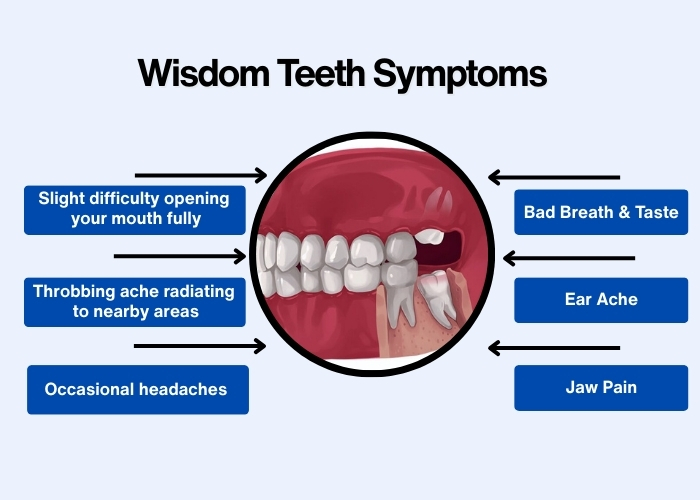
Learn to recognize and respond to common complications with wisdom teeth.