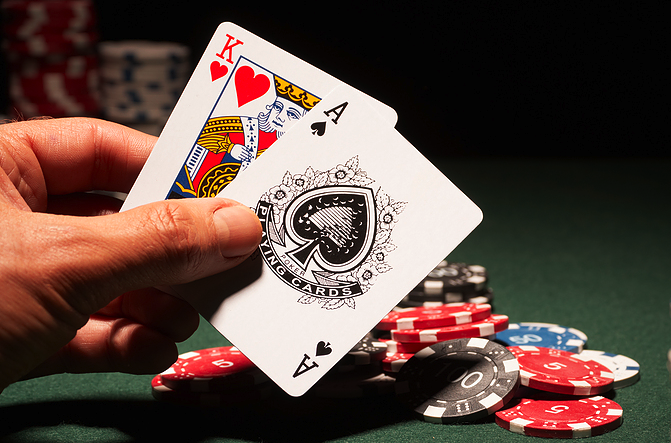
Strategies for Winning at Blackjack
Master key strategies and tips to increase your chances of winning at blackjack.
- Card counting techniques
- Optimal betting strategies
- Bankroll management
- Avoiding common pitfalls
Discover how a simple French card game evolved into the widely played casino phenomenon known as blackjack.
When was blackjack invented? This question opens the door to a fascinating journey through centuries of gaming history. Blackjack, one of the most iconic and widely played casino games in the world, traces its roots back to the early 1700s. Over time, it has evolved from a simple card game played in French salons to a global phenomenon featured in land-based casinos, online platforms, and mobile apps. Its blend of strategy, chance, and accessibility has made blackjack a staple in modern gaming culture, influencing everything from casino design to digital entertainment.
Blackjack is widely believed to have originated in French casinos around the early 18th century. Historical sources consistently point to France as the birthplace of the game, with references dating back to the 1700s. The game was known as Vingt-et-Un (French for "twenty-one"), and it quickly gained popularity among the French aristocracy and in gambling houses. The rules were simple: players aimed to reach a score of 21 without exceeding it, a principle that remains central to blackjack today.
Vingt-et-Un is considered the direct predecessor of modern blackjack. The game was played with standard 52-card decks and featured a banking system where one player acted as the dealer. The objective was to get as close to 21 as possible without going over, a rule that has remained unchanged for centuries. The game's popularity in France laid the foundation for its spread across Europe and eventually to North America.
The transition from Vingt-et-Un to modern blackjack began with the migration of French colonists to North America. The game was introduced to the United States in the early 19th century, particularly in New Orleans, where it became a staple in gambling halls. The rules were adapted to suit American tastes, and the game began to take on the characteristics that define blackjack today.
Blackjack has a rich history that spans several centuries, originating from French card games.
Today, it is a staple in casinos worldwide, adapted for both online and offline play.

Blackjack was brought to American casinos in the early 1800s, with New Orleans serving as a key hub for its introduction. The game quickly gained popularity, especially after the legalization of gambling in Nevada in 1931. Las Vegas became the world's gambling capital, and blackjack played a significant role in its rise. The game's simplicity and strategic depth made it a favorite among both casual players and seasoned gamblers.
The name "blackjack" emerged as a marketing strategy in the early 20th century. American casinos offered a special 10:1 payout for a hand consisting of an Ace of Spades and a black jack (either the Jack of Spades or Clubs). This hand was called a "blackjack," and the name stuck even after the bonus payout was discontinued. The term became synonymous with the game itself, and it has remained the official name ever since.
Blackjack's transformation into a popular cash game began in the 19th century, as it moved from private salons to public casinos. The game's appeal lay in its combination of skill and luck, making it accessible to a wide range of players. The introduction of standardized rules and the development of card counting strategies further enhanced its popularity.
Since its invention, blackjack has undergone several rule changes. Early versions of the game allowed only the dealer to double down, but modern rules permit players to double down on any two cards. Other changes include the introduction of splitting pairs, insurance bets, and the use of multiple decks. These modifications have helped to balance the game's odds and keep it engaging for players.
Blackjack has adapted seamlessly to the digital age, with online casinos and mobile gaming platforms offering a wide range of blackjack variants. Players can now enjoy the game from anywhere in the world, with options for live dealer blackjack, virtual tables, and mobile apps. The game's popularity has only grown with the rise of online gaming, making it one of the most played casino games on the internet.
Current trends in blackjack gameplay include the rise of live dealer options, where players can interact with real dealers via video stream. This has added a new layer of excitement and authenticity to the game. Additionally, the development of new blackjack variants, such as Spanish 21 and Blackjack Switch, has kept the game fresh and appealing to modern audiences.
The answer lies in the early 1700s, when the game first emerged in French casinos as Vingt-et-Un. Over the centuries, blackjack has evolved from a simple card game to a global phenomenon, shaping the landscape of modern gaming. Its journey from French salons to American casinos and now to online platforms is a testament to its enduring appeal. Whether you're a seasoned player or a curious newcomer, blackjack offers a rich history and a world of strategic possibilities. We encourage you to explore the game further and share your thoughts or experiences with this timeless classic.
Our content is supported by responsible gaming partners dedicated to promoting safe gambling practices.



Master key strategies and tips to increase your chances of winning at blackjack.

Discover how math influences game outcomes and the art of decision-making in blackjack.
Explore the latest blackjack game variations introduced in top casinos.
Join exciting online blackjack tournaments and compete for grand prizes.
Participate in workshops to refine your blackjack strategies and skills.